
Written by Sam Knowlton and Roberto Baldea
Edited by Sarah McDonald
Tommy Hilfiger era:
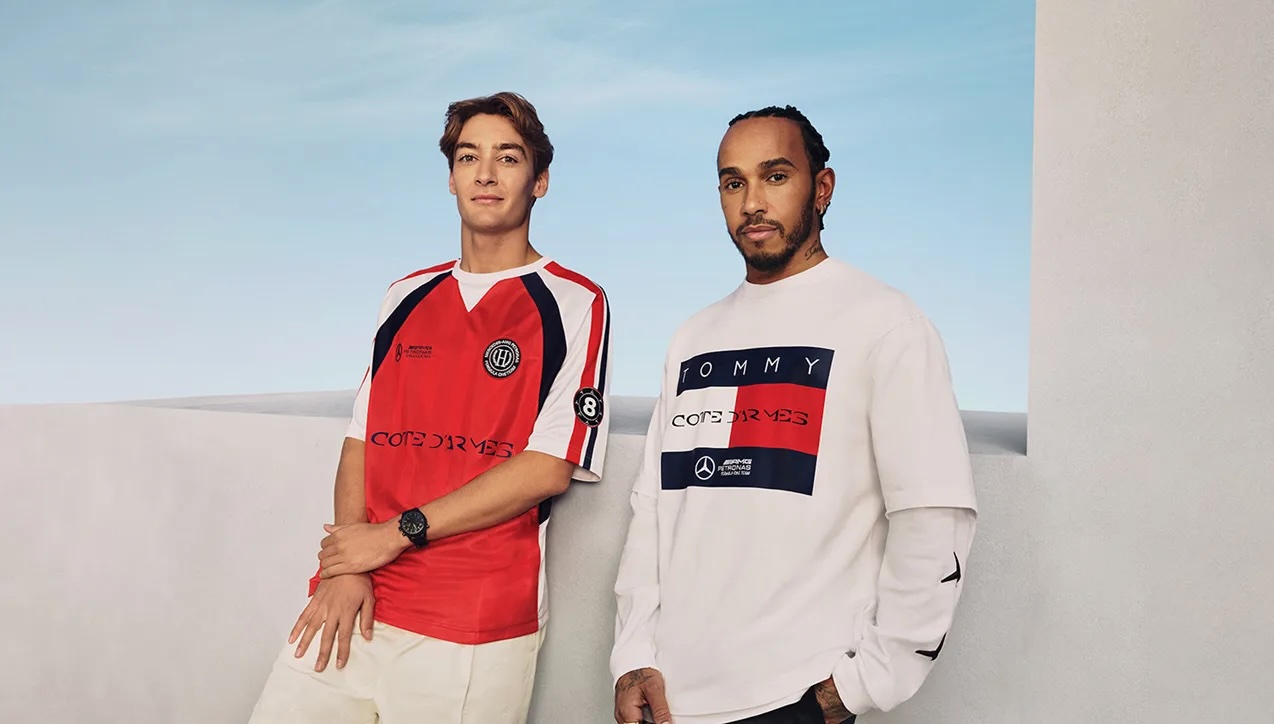
It would be fair to say that Lewis Hamilton and Tommy Hilfiger partnership initially felt like a natural fit. The Hilfiger brand has had tight involvement in the F1 scene since 1991, sponsoring Mercedes since 2018. Even before becoming one of the most successful drivers in Formula 1 history, Hamilton was already closely tied to Hilfiger; as he became the face of Mercedes’ dominance, the alignment between driver, team, and sponsor felt seamless.
But over time, this alignment began to feel limiting. As Hamilton’s long-term future with Mercedes grew uncertain, and as fans voiced increasing frustration over uninspired merchandise, the partnership no longer reflected the team’s future direction. This tension began to show in one of the last collaborations between Hilfiger and Mercedes, led by designer Clarence Ruth. From classic pieces to sticker-bombed tees, the collaboration followed the same path as previous work: overpriced, uptight-feeling pieces.
A need for change:
At the start of the 2024 season, 7-time World Champion Lewis Hamilton announced that he would be leaving Mercedes at the end of the year to join their rival Scuderia Ferrari. Mercedes — with their team principle Toto Wolff, and head of communications Bradely Lord — now had to prepare for a change they had not been expecting for at least a couple more years: losing the face of their brand. Public discourse centred on Lewis Hamilton finishing his Formula 1 career as a Mercedes driver after dominating the world of Formula 1. Lewis had won 6 of his World Championships with Mercedes; his first championship was won with Mclaren, but even then, was powered by a Mercedes engine. Who would Mercedes replace Lewis with? What would it mean for the team? What would it mean for Mercedes as a brand? Mercedes knew this was more than a driver switch, this was a decisive moment in their brand identity. After being tied to Lewis since 2013, relying on him as the biggest face of the brand, this could mean a sinking relevancy or a switch towards the future.
Mercedes decided not to play it safe, and instead pushed the boundaries of what fans expected. How do you replace one of statistically best Formula 1 drivers of all time, who has dominated the sport for your team, in the “pressure cooker” that is the world of Formula 1? Mercedes could have replaced Hamilton with an established star — proven drivers like Carlos Sainz, and Fernando Alonso are names that come to mind — but instead decided to doubled-down on their own pipeline, signing 18-year-old Kimi Antonelli from their development academy. This change meant that their driver lineup was now fully academy developed by Mercedes, as George Russell was also supported by the silver arrows before joining Formula 1 as a Mercedes driver.
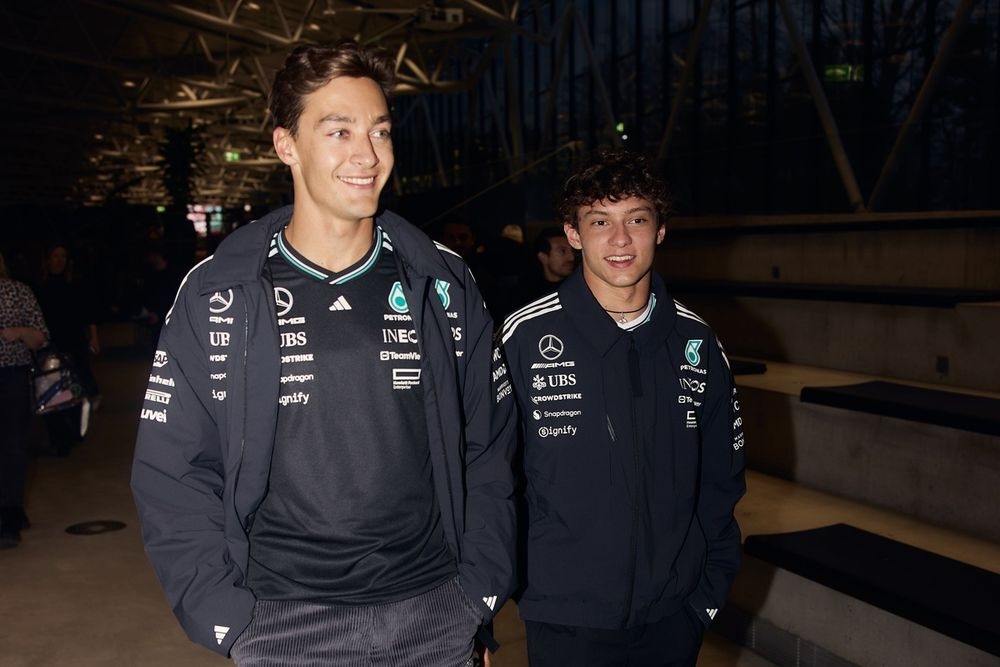
The brand changes did not stop on the track. They could no longer rely on Lewis Hamilton’s image anymore, and they didn’t want to. Visually, Mercedes decided to end their partnership with Tommy Hilfiger, who they had been partnering with since 2018. Their replacement? Adidas. After ending their respective partnership with the German National Football team, the three-striped brand turned to motorsport and joined arms with Mercedes beginning in the 2025 season. The Mercedes teamwear now had 3 stripes on the side instead of Tommy’s monogram and colours.
Adidas era:
The biggest German sportswear brand joining forces with the biggest German F1 team is as close to a match made in heaven as F1 has ever seen. Their collection introduced more lifestyle and sporty pieces, including a dropped shoulder, baggy team hoodie. This new line gestured towards the different trajectory Mercedes would be taking in order to feel more down-to-earth and closer to their fans. Along with the traditional sporty three-striped lines, Adidas also paired its high-fashion branch Y3 with Mercedes to completely reinvent their previously-preppy aesthetic, transforming it into a modern, avant-garde one. While impressive, the shift to this new sleek, black, oversized aesthetic has definitely left some fans caught off guard after years of staying in the status quo. Increasingly it’s starting to feel like Mercedes is pushing for cultural relevance by distancing themselves from the old F1 and embracing a new era and new crowds. Mercedes would do well to heed this warning, lest they lose fans in too-abrupt an aesthetic shift. However, seeing as it’s only been a year from the beginning of the collaboration, it’s still anyone’s guess how it’ll be looked back upon after all is said and done.
Mercedes x Adidas x Bad Bunny collection:

Unsurprisingly, through this ocean of change, the new brand-couple has cleverly found a way to integrate Bad Bunny, one of the hottest names in fashion, into their partnership. In a perfect momentum-building move, Adidas used its longstanding relationship with the star to bring in a splash of culture and art to the brand new Mercedes partnership. This showed that this isn’t an ordinary collaboration, and that Adidas is in Formula 1 to stay. Not only was the collaboration a showcase of how Mercedes and Benito could design traditional Adidas footwear and clothing, but Bad Bunny also went right for an overhaul of the AdiRacer GT, the brand’s signature racing shoe. Overall, the collaboration served to show that not only could Mercedes x Adidas make teamwear, but that they would make a legitimate splash in the fashion scene rather than exist as a typical contract expected of every F1 organization.
Chinese New Year jacket
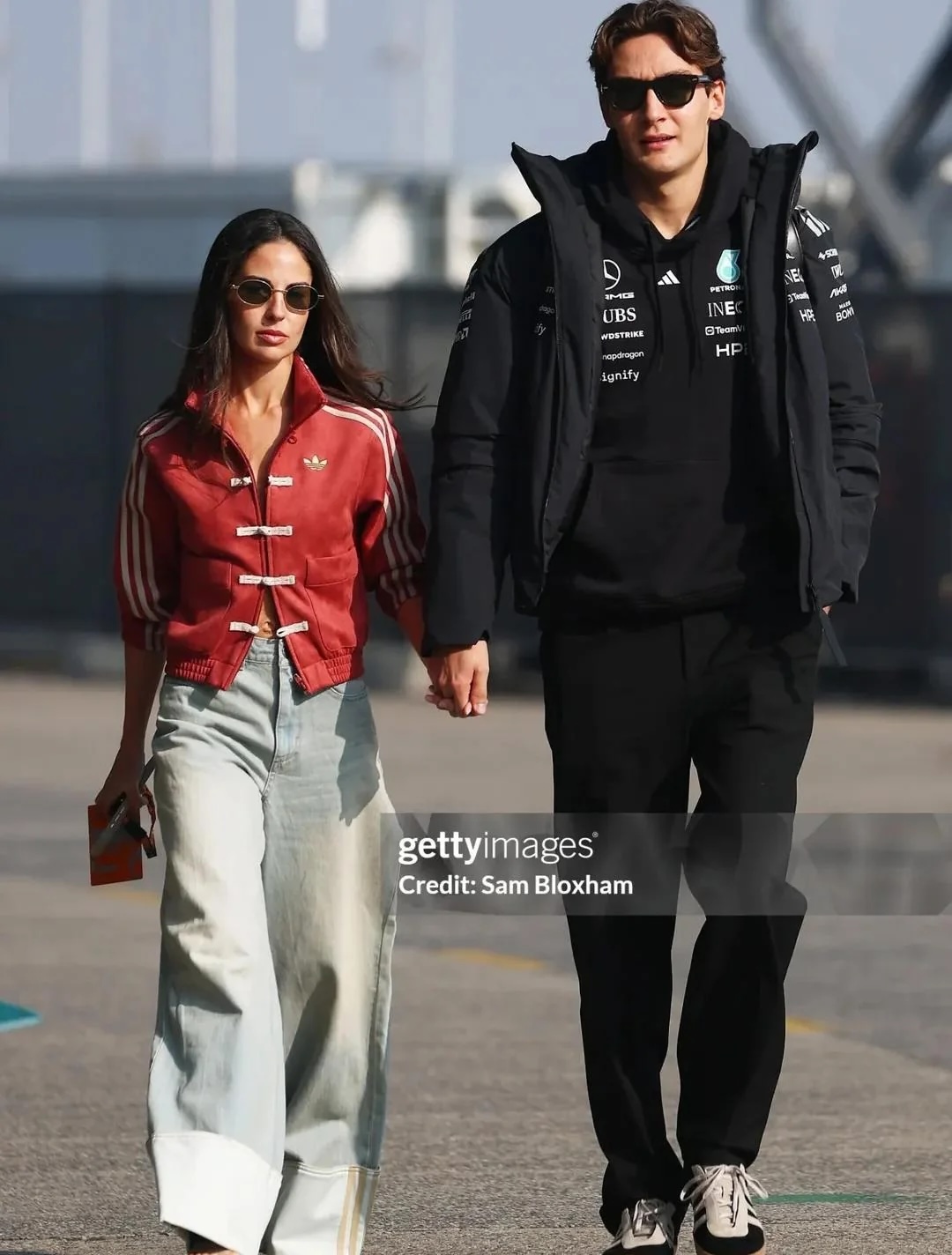
Pursuing their push for cultural relevance, and as the Formula 1 circuit travelled to China, Adidas dressed Mercedes driver George Russell and his girlfriend Carmen Mundt in a Chinese New Year inspired jacket that was widely discussed online for its historical look. The piece referenced a traditional “tang” jacket, with frog loop closures typically worn at weddings, conferences, or important moments, and reworked it into a streetwear piece. It wasn’t just for exclusivity that the piece was only released in its namesake country: it became a way for the team to use fashion to make a nod of respect to their host, and connect with the culture around the race.
Together, these moments point to a clear change in direction. Mercedes is no longer just operating within Formula 1, but trying to exist beyond it as well. It’s still early, but the intent behind the shift is already visible. In turn, it’s starting to change how fans engage with the team, not just through performance, but through identity and culture.