By: Charlotte Dominy
Edited by: Léah Champagne
Walking into Espace Jax’s venue for the Fall Circle of Fashion runway show was like stepping into the theme of Ecliptica itself. The dark wood of the old church was lit with deep blue lights that cascaded to the ceiling, and the dim atmosphere created an allure perfect for the cosmic theme. Over 300 seats would later be filled that night, as models walked down the runway for the sold-out show.
Backstage, however, was a little different. Lights on full, tables everywhere, and clothes. Lots and lots of clothes. With artists doing final touches, designers twirling models, and club members with clipboards coming and going, one thing struck me quickly: the amount of preparation that goes into this is something I had completely underestimated.
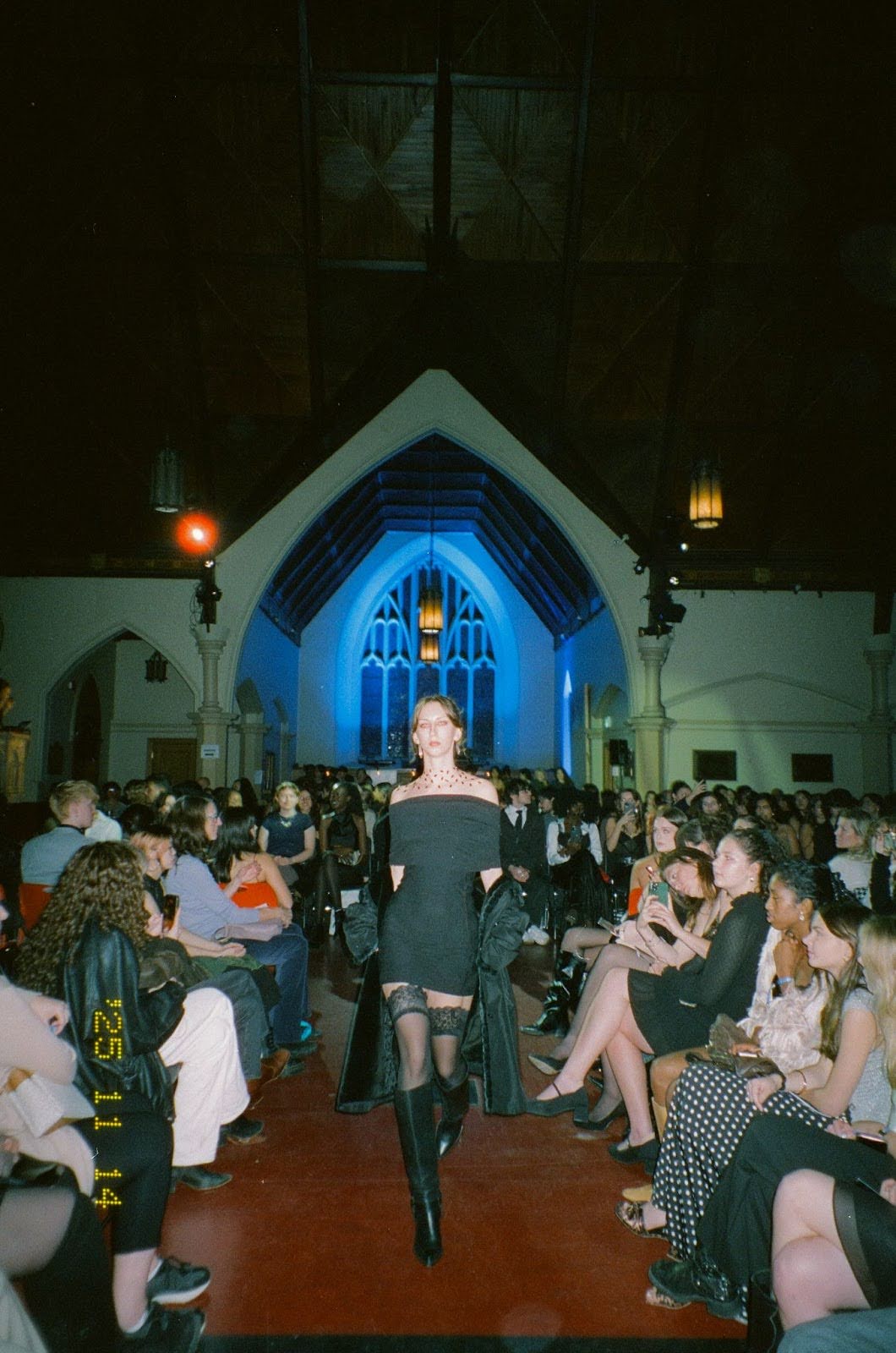
We were lucky to have 12 talented student designers showcase their work on the runway, some preparing to debut their first collections, while others had already been involved in Circle of Fashion’s past runways. New or experienced, all their collections showcased the great creativity we have here at McGill finally coming to life. Therefore, let us congratulate every designer, model, makeup artist, and club member who made this show a success!
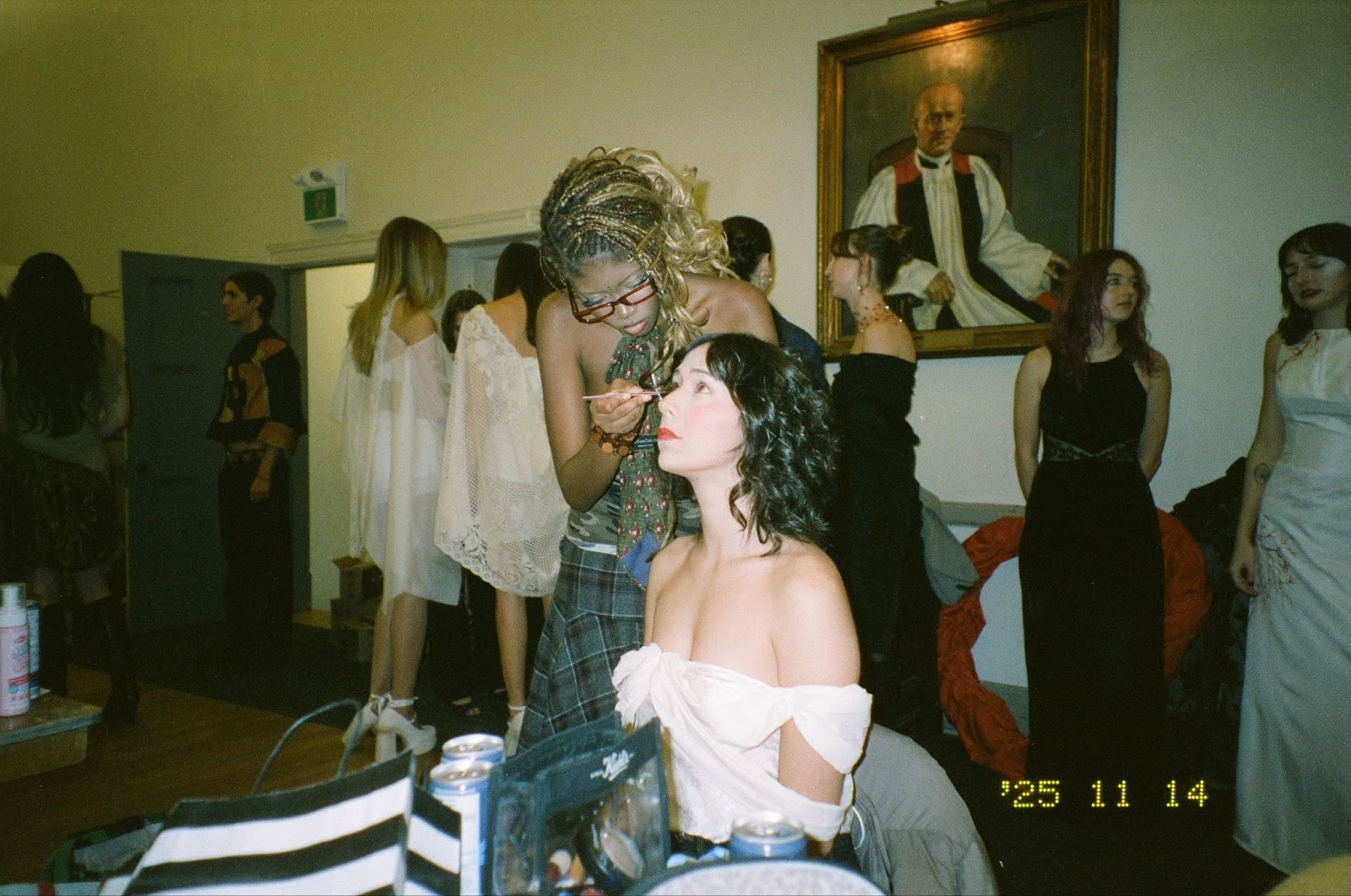
Now, let me present to you the blog’s Fall 2025 fashion runway show recap, featuring some exclusive insight into the designers’ creative processes.
Exploring Opposites
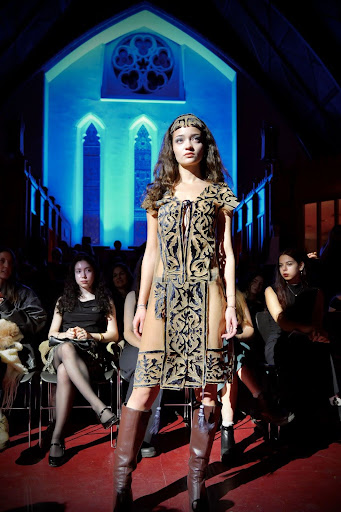
In my eyes, one central theme of the collections that hit the carpet was the relationship between two opposites: femininity and anger, dream and reality, or thrifted and new. Many ensembles incorporated thrifted fabrics, where looks were made of old clothing reconstructed into something drastically different. One of my personal favourites: the transformation of a tablecloth into a beautiful slip dress. I had the privilege of examining the dress up close, and I can vouch for the impressive craftsmanship—even the tassels had been incorporated into the dress in ways that hid its original origin as a table’s placemat.
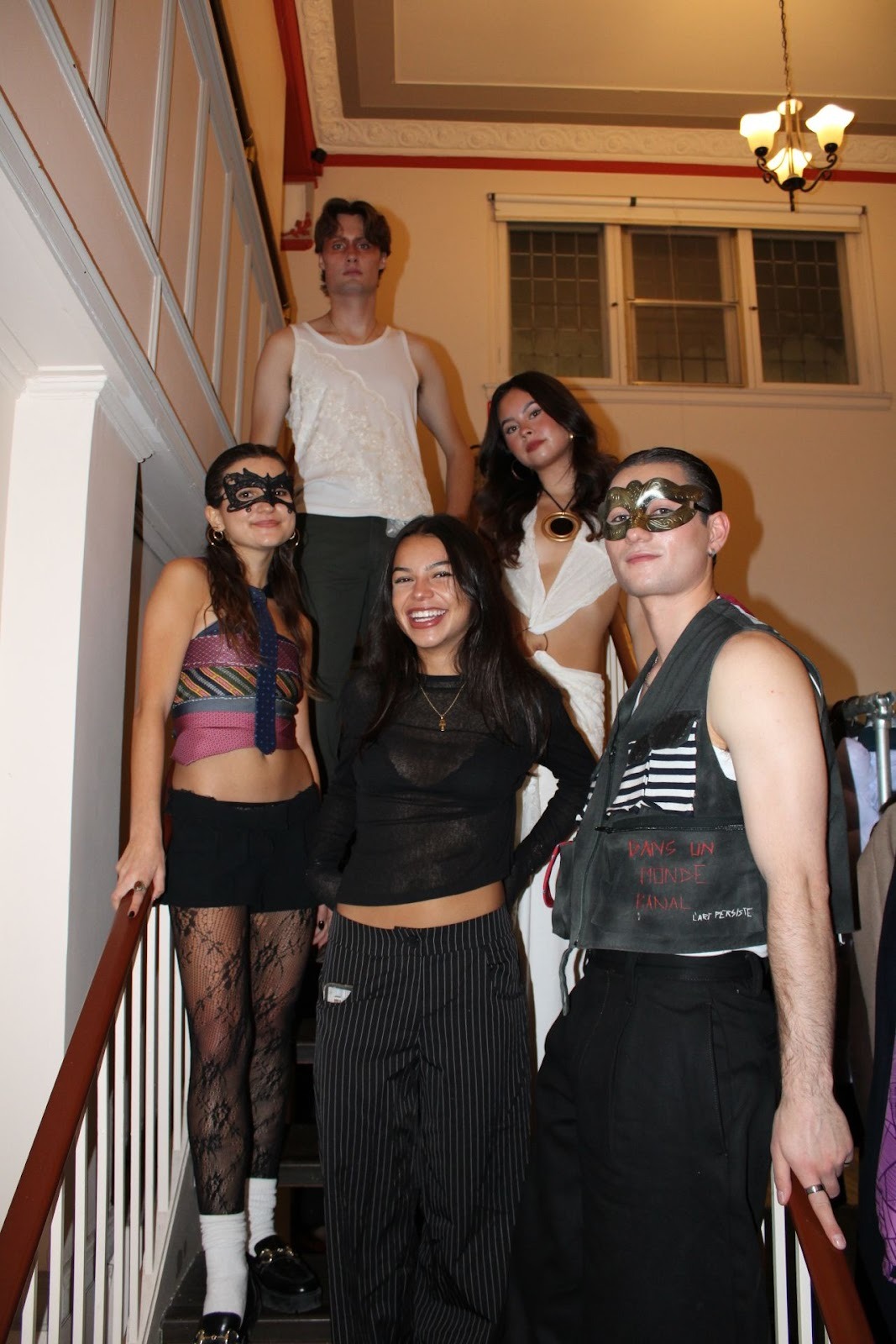
With a collection of four looks by Camila Hernandez, the theme of dream versus reality examined the corporate dread that even students seem to taste these days. The two models representing reality wore dark colours and donned mysterious masks. One model sported an off-the-shoulder top made entirely of ties, and the male model wore a vest with black-and-white striped pockets, symbolic of a mime’s costume. His vest has an embroidered quote, “dans un monde banal, l’art persiste,” or “in a mundane world, art persists.” The two other models, representing the dream-like side, were dressed in soft whites with delicate flow or dainty lace—a harsh contrast from the sharp edges of the embroidered words on the vest.
McGill’s Own Angels
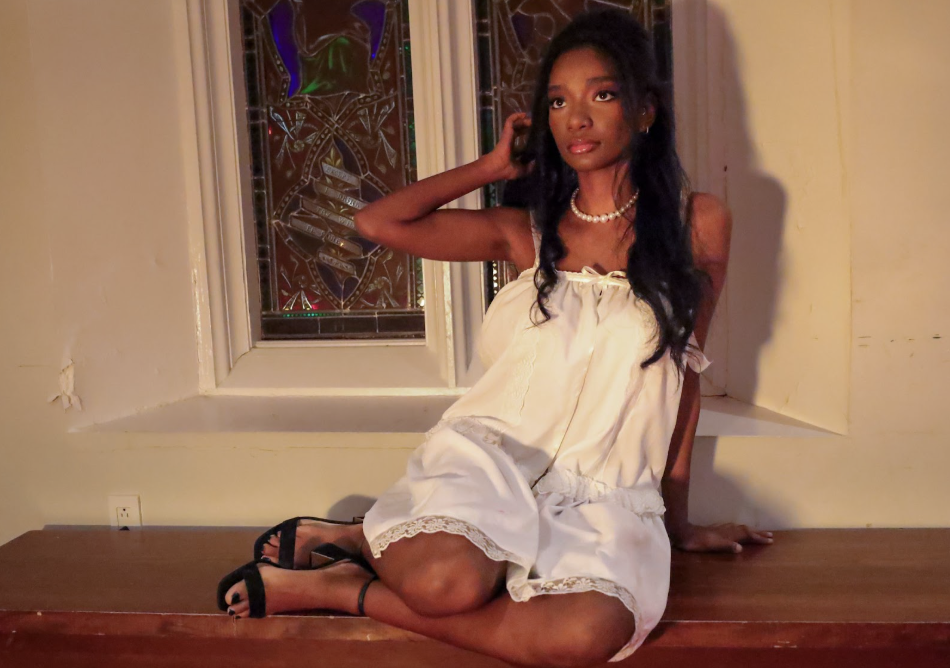
Another theme spotted on the runway had me thinking back to the Victoria’s Secret runway show that had taken place a few weeks prior. Beautiful, flowy lingerie was featured in multiple collections, made with both thrifted and new fabrics, and put together into cute, yet sophisticated, skin-teasing pieces. With bows in their hair, those iconic blowouts, and light pinks and pure whites, I think these works were proof that McGill has its own angels.
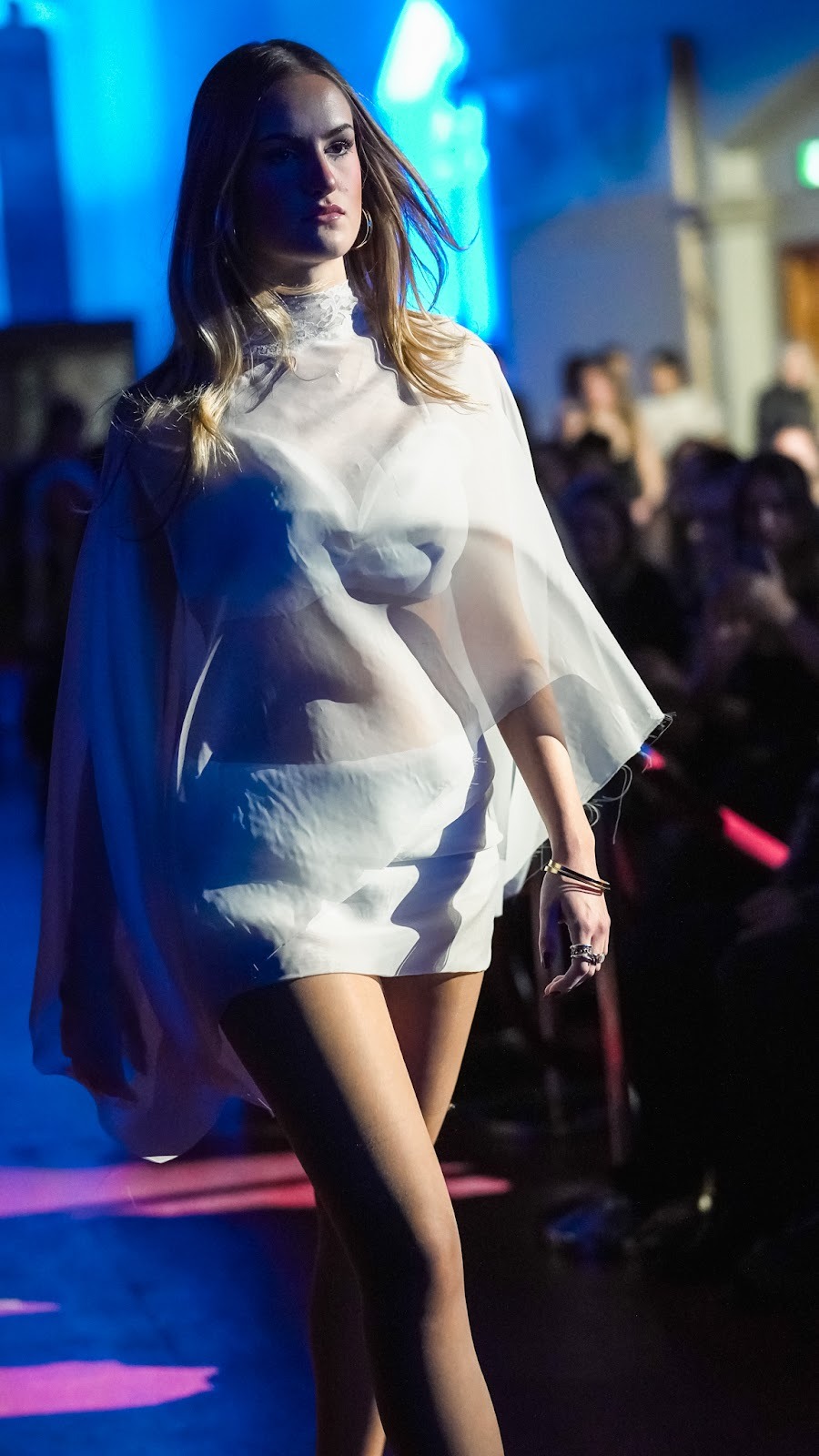
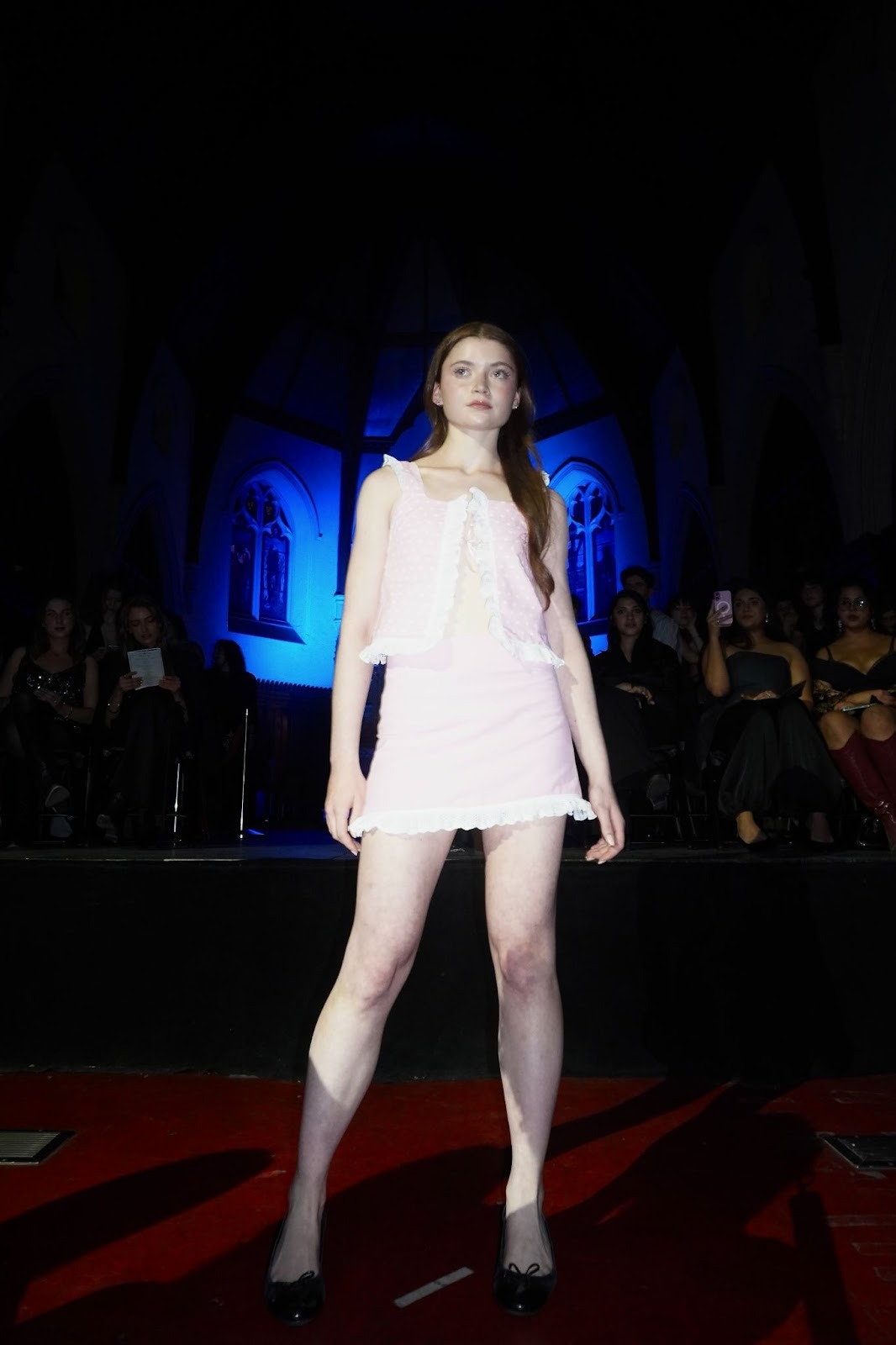
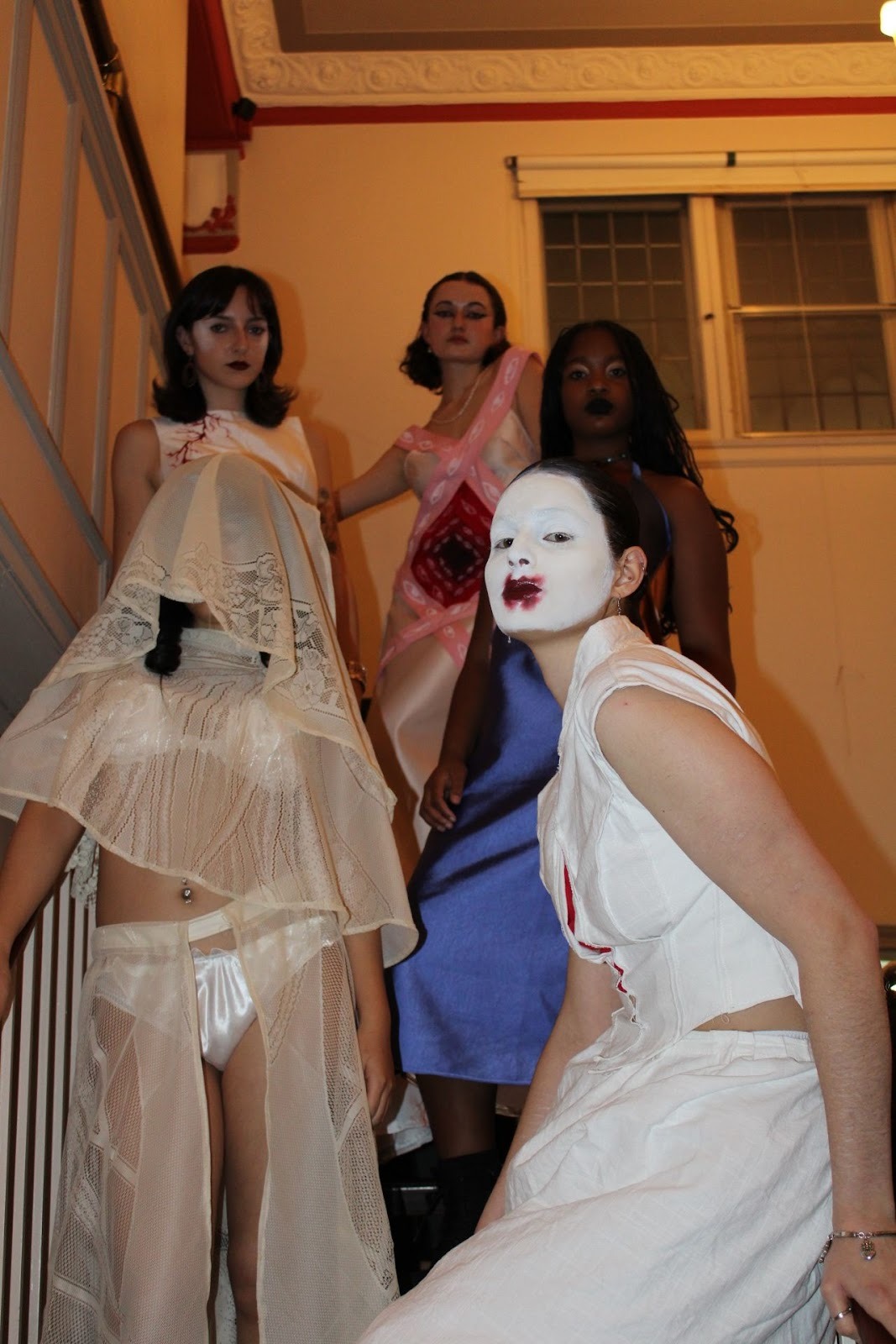
But let’s not forget the literal, biblically accurate angels presented on the runway as well. The more haunting looks, all five hand-painted by the designer Aurore Mombelli herself, were directly inspired by her passion for art history, including the frightening multi-eyed angels depicted in old oil paintings. Such angels and their gazes are present in the pink and white dress, where the diamond-shaped ribbons of eyes deepen into a dark void as you centre on the middle. The other looks also drew inspiration from past sculptures, translating their key elements into the collection and creating something unsettling, yet beautiful.
Swinging 60s
The final and most prominent theme seen on the Fall runway can be tied together by the iconic decade of fashion: the 1960s. Blue eyeshadow and big eyeliner were everywhere, with short babydoll dresses making appearances too. Don’t forget the iconic beehive hair, featured in some looks, truly evoking those Nancy Sinatra days. As she sings, These boots are made for walking: and so are these student-sewn baby doll mini dresses.
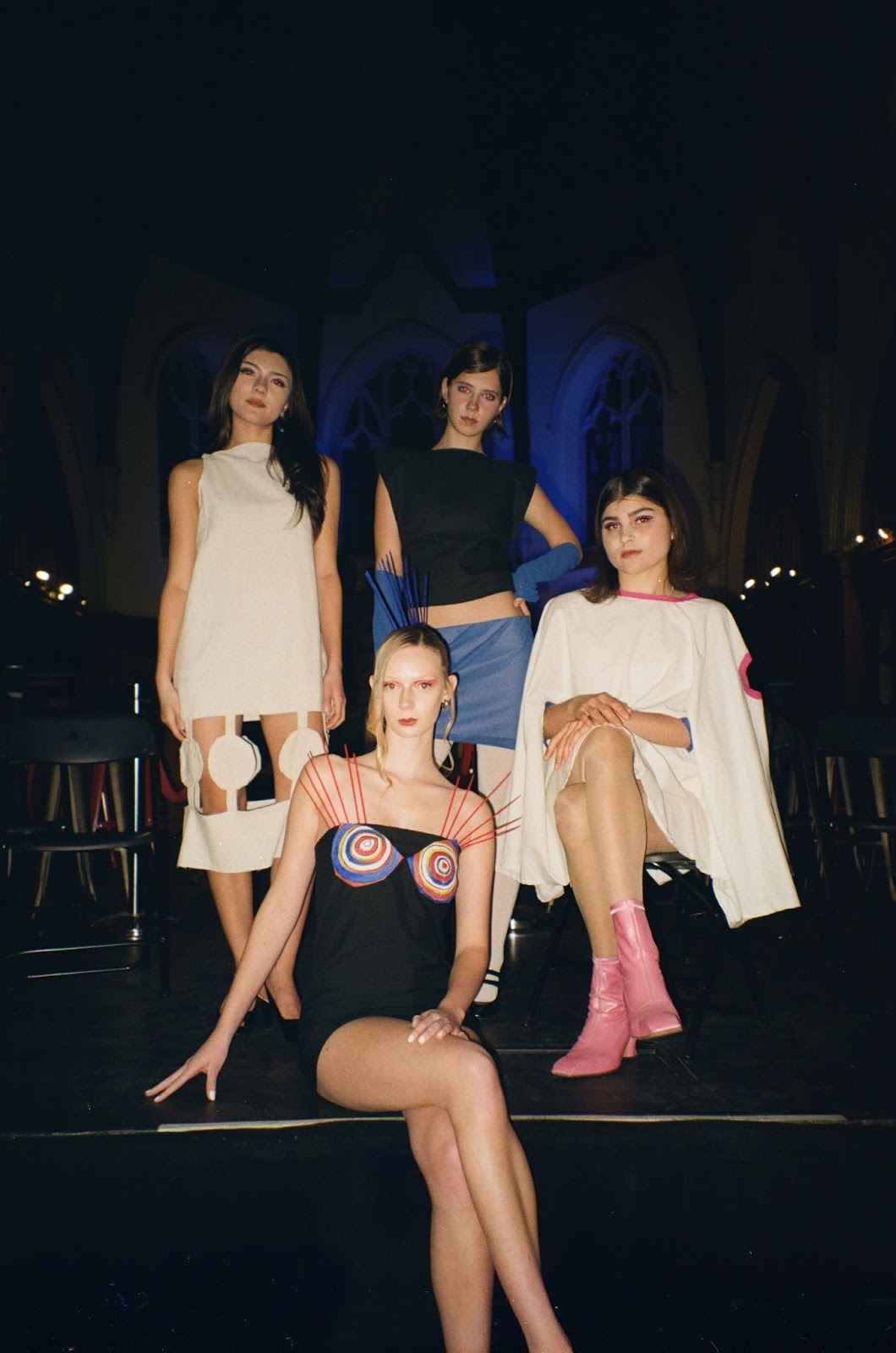
Another theme of the 1960s, which made its mark before the decade and continued to bleed into the late 20th century, is the retrofuturist aesthetic. While the term “retrofuturism” wasn’t coined until 1993, in the modern era, any 20th-century art that attempted to grapple with the future appears retro to us. With an ode to that old aesthetic and its art, this four-piece collection by both Nora Roos and Nora Srinivas used geometric shapes, strong shoulder lines, and bold makeup to translate its elements onto their clothing. The circles on the white dress were created by threading wire through the fabric, meticulously shaping the wire into perfect circles, all to sew them back up. The clean lines and landmark colors—white, black, red, blue, and a hint of pink—truly pulled the collection together.
And there we go! I hope you enjoyed the detailed recap of the 2025 Circle of Fashion runway and its insight into the inspirations and methods behind our student designers. While not all themes and looks could be covered in the piece, that only leaves one solution – Buy a ticket to be fully included in this fantastic experience at our Winter show 😉