
Written by Luke Smith, Edited by Jack Bouchard
The rosary is no longer kept on the nightstand; it dangles from the thin necks of models and pop icons. Lace veils, prayer hands, bruised knees, gold crosses, and holy tears no longer decorate the vigil to Mother Mary. Instead, they decorate the room of a twenty-something-year-old who reads more Lana Del Rey lyrics than Bible verses. In a world where faith has become fashion and confession has become performance, so-called Catholic-Core has risen like the smoke of a church candle. Religious symbols that were once emblematic of piety have been baptized into the kingdom of the mainstream, co-opted by the fashion cycle’s endless search for the newest trend. From runways to TikTok edits, catholic-core has breached the veil of religion into the realm of aesthetics. As with any new trend, catholic-core has garnered a slew of both support and criticism. However, because of its holy nature, criticism has perhaps been a little more pointed than usual, with critics naming it sacrilegious. This article examines the journey of Catholic Core, its rise in fashion, its cultural captivation, and its future in the industry.
Genesis
To understand this aesthetic, we first must understand the history of religious iconography. In Christianity’s early years, sacred imagery and icons were a contentious topic of debate: whereas contrarians feared that these icons would be worshipped more than the divine beings themselves, supporters argued that icons should be seen as reflections which were meant to facilitate worship of the saints of God. After centuries of deliberation, it was eventually declared in the eighth century AD that icons were acceptable symbols of devotion, rather than blasphemous caricatures of the big man upstairs.
Indeed, the main reasoning behind such a choice was to facilitate worship for illiterate members of society. These icons stood in for scripture for uneducated members of the congregation and acted as a bridge between human understanding and divine existence. This distinction between image and representation has become central to fashion’s fascination with religious symbolism. Christianity, especially, has been linked with fashion for this reason, because the other Abrahamic religions often prohibit religious iconography.
Lamentations
Perhaps designers and pop stars wondered if their fashion could be sanctified into the divine like statues could. I contend that this first sanctification of religious iconography as an aesthetic was spearheaded by Madonna. She sported crucifixes and rosary beads in public appearances during a time when religious blasphemy was seen as condemnable rather than merely frowned upon. Her Like a Prayer music video blurred the line between sacred and sensual and challenged what the divine could represent in a pop landscape filled with the virtues many catholics may have opposed.

In Madonna’s wake, designers have continued blending the holy and the unholy on the runway. Alexander McQueen’s FW 96 collection, infamously titled “Dante”, featured models walking as fallen angels in a gothic church. The black mask, affixed with a white crucifix, has become one of McQueen’s most famous pieces, with only a dozen produced—even Kanye was accused of sporting a fake at Super Bowl LVII.
Other designers, such as Dolce & Gabbana, have famously taken black lace and jewel-encrusted Madonnas as a signature of their runways. Importantly, never in these first explorations of the religious theme do the designers take on a mocking tone. Rather, they mythologize existing symbols by featuring them in their designs, creating a secondary place of worship.
The final breach of catholic-core in the mainstream occurred when the Met Gala announced its 2018 theme, Heavenly Bodies: Fashion and the Catholic Imagination. This theme cemented the aesthetic as “high-fashion,” but simultaneously allowed it to come off the haute couture runways and into the palms of any consumer who tuned into arguably the most popular red carpet in the world.
Below: Zendaya as Joan of Arc for the Met Gala
Current Prayers
In recent times, catholic-core has thrived in digital spaces. Music, film, and social media have allowed the aesthetic to move away from the elite and elderly to the young and romantic. Lana Del Rey, with her melancholy and crucifixes, creates a story from sin and turns it into lustful repentance. Lady Gaga references the betrayal of a once beloved Apostle Judas in one of her most well-known songs. Rosalia’s new album, Lux, in which she is featured on the cover in a nun like robe, draws from classical catholic roots, exploring themes of religion not only through aesthetic but also through operatic tradition and references to over nine saintly figures in her lyrics. The “pop” album has even received praise from José Tolentino de Mendonça, the Cardinal who is the prefect of the Vatican’s Dicastery for Culture and Education.
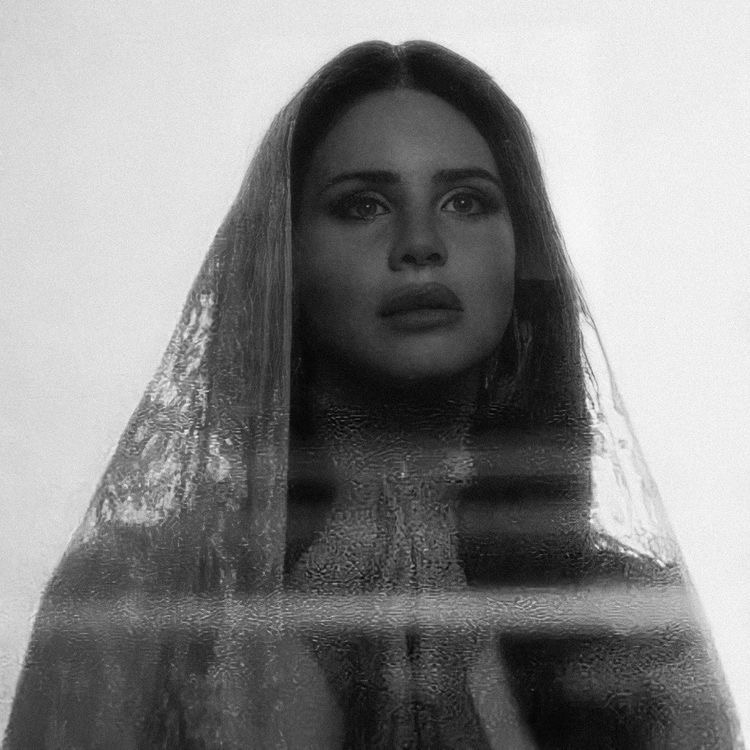

Above: Lana Del Rey; Lux by Rosalia (Album Cover)
Influencers are often the largest proliferators of aesthetics, and Catholic-core is far from being an exception. Influencers such as Oriona Carloto and Enya Unmanzar merge coquette and Catholic-Core, posing in veils with rosaries hanging from their necks, surrounded by candlelight and poetry. It is often hard to describe Catholic-core, but once you see it, it is immediately recognizable. In this way, influencers are reimagining catholic views on femininity, complicating the traditional view of the woman as fragile and devout, creating space for a nuanced and alluring, modern catholic woman.
Film and literature have also paved the way for this visual vocabulary to have a textual basis. Films such as The Virgin Suicides by Sofia Coppola (an aesthete herself,) and the writing of Sylvia Plath both encapsulate themes of repression, purity, and martyrdom. While they might not be in-your-face catholic, these texts represent the extent of catholic-core and the large net which the aesthetic casts. It is not merely crosses and rosaries but instead a set of ideals, emotions, and icons which consolidate into a single ethos.

Above: Four of the five Lisbon sisters in The Virgin Suicides
Penance
Like any popular phenomenon, catholic-core is not immune to controversy and criticism. For many Catholic traditionalists, the use of sacred symbols in fashion quickly moves from art into blasphemy. Adidas’ “Holy Trinity” bikini, for example, sparked major backlash from Christians. The bikini top had “Father” and “Son” written on each cup, and the bottoms had “Holy Spirit” written on them. The sexualized reference to every Catholic prayer was seen as inappropriate and insensitive. In an alternate perspective, Adidas may deserve a more careful consideration. Did the company cross the line with this campaign, or were they allowing the bikini to act as a proxy for woman to reclaim their bodies from the religion that oppressed them? Perhaps, as Adidas shows us, catholic-core can be seen as a mechanism through which women affirm their belief while simultaneously opposing the systems that have repressed them for millennia.

Above: Addison Rae in Holy Trinity Bikini
The persistence of this aesthetic lies not in our love for Catholicism but instead in our craving for contradiction and pseudo-guilt. We crave purity but adore the forbidden fruit. We long to transcend in an increasingly material world. Perhaps in our experience of Catholic-core, we become like Eve, eating the forbidden fruit, tainted by the serpent of aesthetic and crafted personas.
Revelations
Having now traced its origins, what future can we predict for Catholic-core? Well, the aesthetic is certainly not being raptured; it is here to stay. Catholic-core in recent years has been all about controversy, the contradiction igniting anger and allure from all walks of religious practitioners. This contradiction will not disappear, but in a world which is becoming increasingly conservative, the contradiction will become covert, hidden in plain sight. Designers such as Simone Rocha are making subdued and elegant references to religion in recent collections. The contradiction may no longer be present through nudity and lust, but is it any less of a sin to reject the poor and privilege the elite than it is to expose one’s cleavage? Sin, in a religious context, is inescapable, and the most evil of it hides in plain sight. Ultimately, Catholic-Core thrives on irony, the allure of sin draped in holiness. Whether it is presented as reverent or rebellious, it is sin nonetheless. One expression mustn’t be seen as superior due to its adherence to tradition. All of catholic-core stems from the roots of the same tree. The tree that produces the fruit, which allows us to indulge in desire while keeping our fingers on the pulse of the divine.