Written by Luke Christian Smith
Edited by Jack Bouchard
Barricaded red carpets, exclusively curated guest lists, and an iron wall of celebrities lining the front row. For too long, Fashion Week has functioned as a mechanism of exclusion, in which the privilege of watching fashion’s most anticipated collections is reserved for a select few. The fashion industry relies on millions of devoted consumers and spectators to maintain its cultural relevance, yet those same audiences are systematically excluded from its most cherished events. In an increasingly digitized world, fashion seems more accessible than ever; yet the inaccessibility of runway shows challenges the notion that the digital age has brought consumers closer to the catwalk. Fashion houses pretend to care about the average consumer, while their runways remain as exclusive as they are coveted. However, this contradiction was recently challenged by French Fashion commentator Lyas (Elias Medini), whose “La Watch Party” transformed exclusive runway shows from a stuffy echo chamber of fashion elites to a collective street experience for the Parisian public.
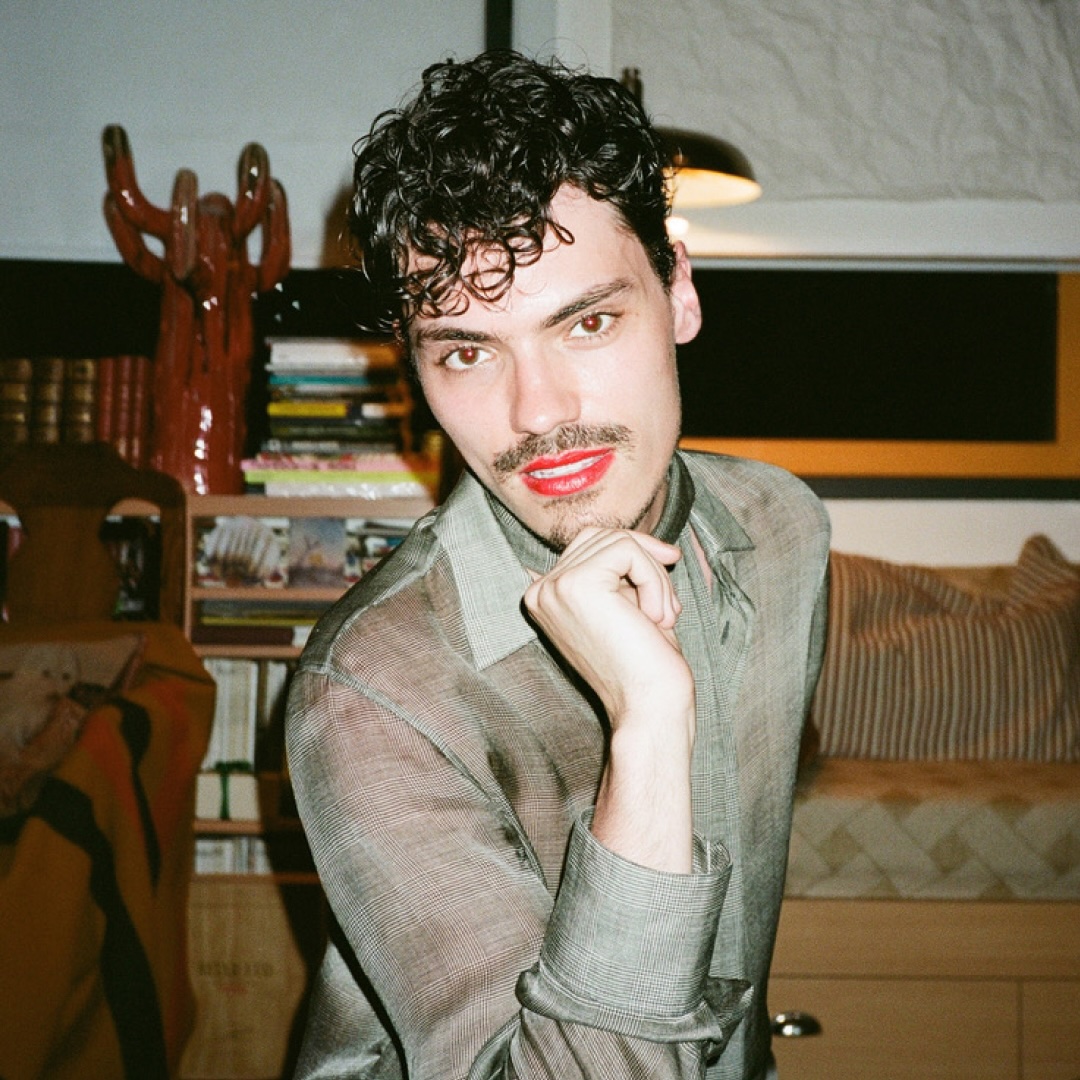
With his unapologetic commentary, red lipstick, and sharp humour, Lyas has quickly become one of fashion’s most outspoken online personalities. Lyas resists the traditional fashion critic persona, and his proximity to fashion’s inner circle has not limited his awareness of its barriers. He successfully uses his experience navigating the divide between fashion enthusiast and industry insider to question why an art form celebrated by the many can only be experienced by the few.
Interestingly, La Watch Party was born from the very exclusivity it seeks to dismantle. In June of 2025, after being excluded from Jonathan Anderson’s highly anticipated Dior debut, Lyas decided to take the fashion show into his own hands. Using the television from his own apartment, he set up shop at a local Parisian bar, Le Saint Denis, and invited his followers to livestream the show together. The event was initially meant to be a spur-of-the-moment gathering, but it drew more than 300 attendees whose passion for fashion far outweighed the industry’s unwillingness to accommodate them.
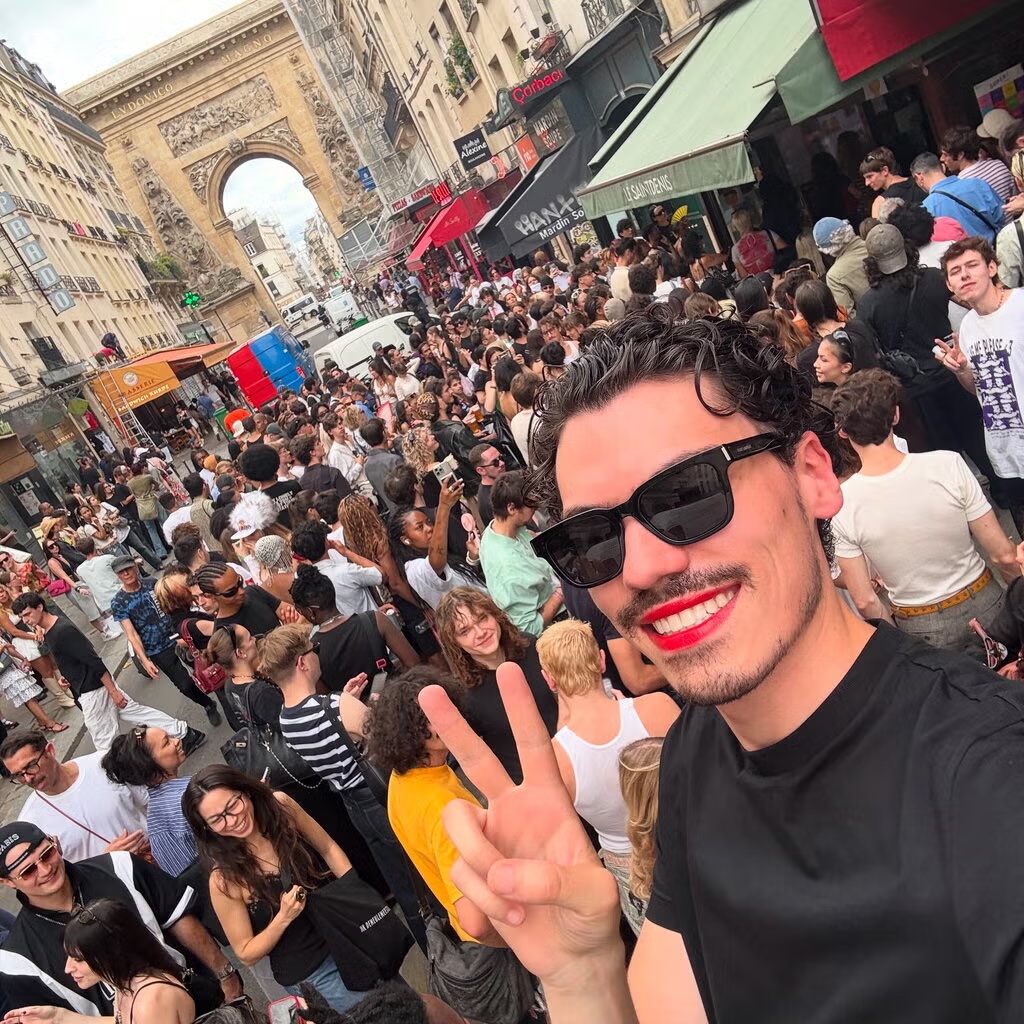
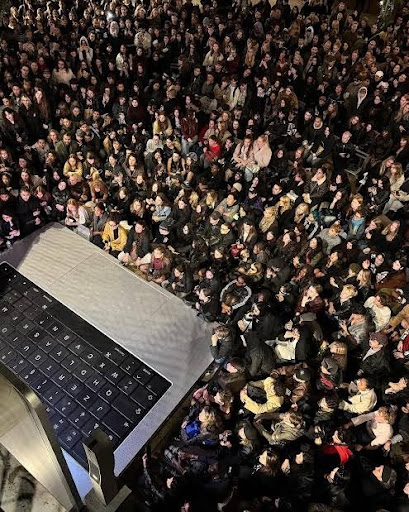
Since its first unofficial gathering, La Watch Party has developed into a widespread cultural phenomenon. In cities across the world, thousands of fashion enthusiasts congregate to witness collections on an oversized screen, reacting with the same enthusiasm that is typically reserved for concerts and sports tailgates. During Matthieu Blazy’s October 2025 Chanel Debut, over 2,000 spectators gathered at La Caserne in Paris to watch the collection’s release. The screening was far from the composed silence of a traditional runway audience, and was punctuated by cheers, laughter, and a communal energy of anticipation. Thanks to Lyas’ initiative, the runway was transformed from a stodgy gallery artifact to a vibrant community celebration.
As La Watch Party has grown over the last year, so has its creative ambition. In September, Lyas released a promotional teaser/film to give audiences a glimpse into the future of the initiative. The teaser begins with a mystery woman speaking on the phone, complaining that she has “nothing to wear” to La Watch Party. Seconds later, the woman is struck by (shall we say) avian excreta, whose pattern becomes the statement piece on her newly adorned avant-garde dress. This teaser echoes the sentiment of inclusion that Lyas has carried from the beginning. By flipping a classic (and nightmarish!) wardrobe malfunction into the centrepiece of his trailer, Lyas shows that La Watch Party is distancing itself from the snobby silence of fashion runways. Building on what started with a group of three hundred or so Parisians who turned up at a shoddy bar on short notice, Lyas now extends his invitation to once-excluded fashion enthusiasts across Paris, London, Berlin, and Helsinki.

In recent months, the initiative has begun attracting the attention of the institutions it originally sought to circumvent. Partnerships with fashion houses and commercial sponsors like Vinted have allowed the gatherings to expand in scale and ambition. This year, La Watch Party extended its reach beyond the established fashion capitals with a tour across France, bringing communities farther from Paris a chance to witness the limelight. Lyas has expressed desires in interviews that the initiative might hopefully exist one day independently of his public persona, and thus what began as a personal rebellion could gradually become an institution itself.
In recent months, the initiative has begun attracting the attention of the institutions it originally sought to circumvent. Partnerships with fashion houses and commercial sponsors like Vinted have allowed the gatherings to expand in scale and ambition. This year, La Watch Party extended its reach beyond the established fashion capitals with a tour across France, bringing communities farther from Paris a chance to witness the limelight. Lyas has expressed desires in interviews that the initiative might hopefully exist one day independently of his public persona, and thus what began as a personal rebellion could gradually become an institution itself.
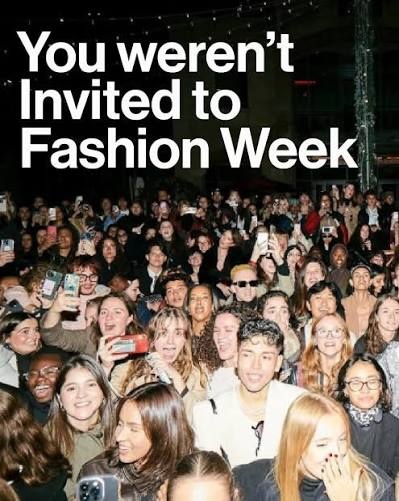
However, this recognition raises a key question: can a movement which was founded upon the rejection of exclusivity maintain its authenticity once embraced by the very industry it challenges? Fashion has an incredible ability to absorb its own opposition, shifting the counterculture into a commercial opportunity. As luxury fashion houses further recognize the potential of advertising from La Watch Party’s devoted audience, the lines become further blurred between the democratization of an experience and farming consumer engagement. The industry’s newfound enthusiasm may not be entirely altruistic and inclusive; cultivating the next generation of luxury consumers may not be an act of rebellion at all.
The significance of La Watch Party lies beyond it giving people a chance to watch the runways: its greatest accomplishment is turning fashion viewership into a communal cultural experience. For most of fashion’s contemporary history, the industry has encouraged admiration at a distance, manufacturing worth from their product by always keeping it at arm’s length. Lyas challenges the assumption that proximity to fashion comes through celebrity or wealth, arguing that fashion’s cultural value should not lie exclusively in the hands of the few who are invited. The front row may always remain reserved for the lucky few, but I believe the most fruitful conversations are now happening under the bright projector lights, between members of the communities who were never allowed through the door.