Written by Charlotte Dominy, Edited by Leah Gilbert
When thinking about fashion, the lover thinks of the shows, designers, and movements that resonate with them the most. The critic, however, can think of many flaws: Overconsumption, harmful individuality complexes, unnecessary hierarchy, and a tone deaf approach to the world’s outside events.
Even fashion lovers can acknowledge the negatives, too. Fashion in the current age has undergone rapid changes, which people still don’t fully understand. Runway shows are shorter, influencers take priority, and quantity often comes before quality for many of the brands we encounter in our daily lives.
This sentiment was what informed my negative reaction to John Galliano’s Spring Summer 2004 ‘Dior Not War’ Runway Collection when I first saw it while scrolling on Vogue’s app. The collection begins quietly, featuring pastel blue looks and the iconic diamond plaid dress, which I still see floating around all over Pinterest boards today.
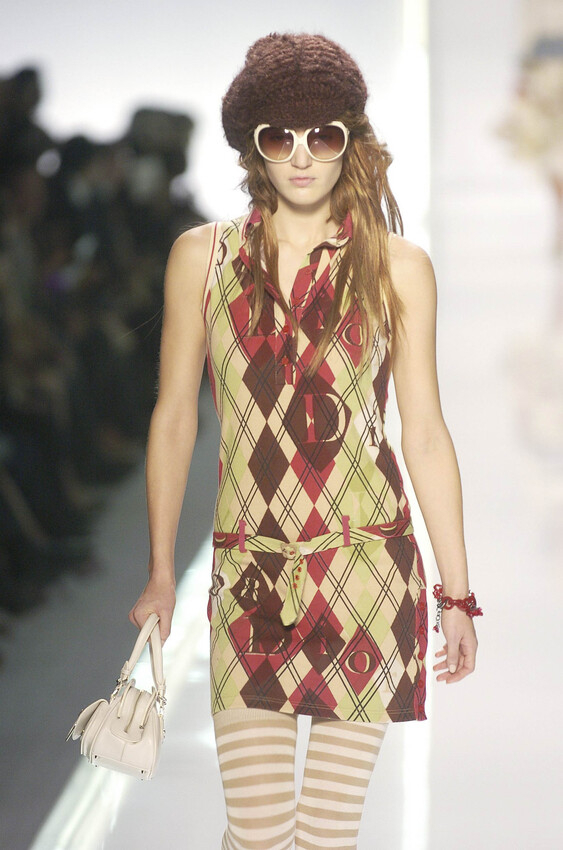
The first few constructed silhouettes then merged into brighter colours and eccentric layering as models strutted the runway, with slogans such as ‘Dior not War’ and ‘Dior for Peace’ appearing sewn onto blue tank tops, velvet bomber jackets, and pink long-sleeve tops. Undoubtedly, the anti-war slogans are just as bold as the neon yellows and graphic patterns.
Is it tone-deaf for an exclusive fashion brand like Dior to make such a bold statement? Dior is a brand that caters to the upper class and a symbol of aspiration for the majority of average people; does the girlish collection and bold message really align with the beliefs of elites who make up the majority of the brand’s consumer base? Unlikely. But here’s my argument.
It’s October 2004 in Paris. The global war on terror is in full swing under President George W. Bush of the United States – a headline sure to have made it across the ocean to Parisians. While peace may have been in the streets of Paris, other countries were suffering greatly due to the intervention of powerful nations that maintained peace for themselves while denying it for others.
Often, political messages on the runway represent complex histories — the origins of the garments themselves, exclusive interviews by designers, or even the most iconic political statements made by protestors who invade runways from the outside, rather than the brands themselves.
John Galliano then presents a collection that removes the barrier of understanding these complex issues with the three-word slogan: “Dior Not War.” The words leave no room for misinterpretation, and fashion has never been so bold. Dior’s stage is a prestigious and significant one in the fashion world. Surely, under pressure from shareholders to maintain Dior’s relevance and profitability, the decision to spark controversy on one of fashion’s biggest stages shouldn’t be discredited.
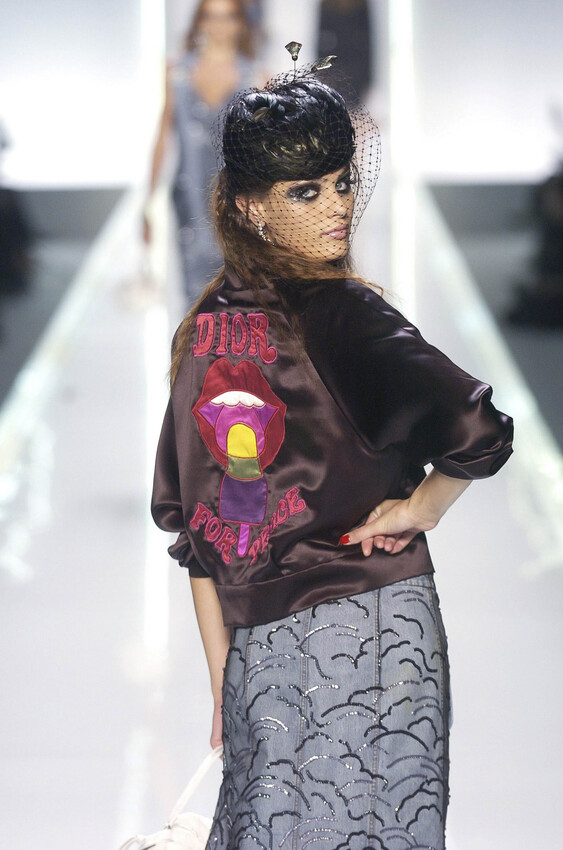
However, this simple statement piece is insufficient when dealing with the artistic medium of fashion. Galliano still needed to produce a cohesive collection of wearable clothing to satiate the critics and fans. The decision to create a striking, neon, and girlish runway collection, thus only further catapulted the message to the audience. The fashion critique could still investigate the collection’s silhouettes and inspirations, while the general reader/viewer, drawn to the girlish theme, could still aspire to own it.
The collection almost urges the viewer to make fun of it. It puts you into the shoes of a naive girl, an immature teenager. A girl hopeful enough to claim shallow beliefs with full confidence — Dior not war. Fashion, not violence. But why critique the girl who truly believes in a better world, like society so often does? Do bright colours and corny musical choices invalidate the beliefs of teenage girls around the world?
My initial reaction, which was less than positive, may have been part of the point. The collection is shamelessly aware of its loud presence and immaturity, and it’s done so to make you question why you react that way in the first place to characteristically girlish qualities. Because of its neon lavenders, pinks, and greens, with rainbow bangles too big for the models’ wrists, you’re not going to take it seriously?
The question is, would the serious world of politics prefer a simple white backdrop and boring black text to showcase such an opinion? Does the anti-war message of the collection lose validity because the metallic eyeshadow extends past models’ eyebrows and the skirts are mini?
There is a bit of intellectual work to be examined, too. When you look closely, the graphics on the baby tees the models wear resemble the popular medium of collage. Collages and Photomontages served a significant political purpose within anti-war and institutional movements of the 20th century, when newspapers were mass-produced and photo prints were accessible. To cut and paste newspapers and images together and create a whole new, often satirical or critical message was the newest hit in the art world. Think Hannah Höch’s Cut With the Kitchen Knife, Dada Through the Last Weimar Beer-Belly Cultural Epoch in Germany (1912).
Dadaists loved it; abstractionists in general saw it as an instrument of modernism. The chaos, absurdity, and, well, girlishness of it served to delegitimize elite institutions.
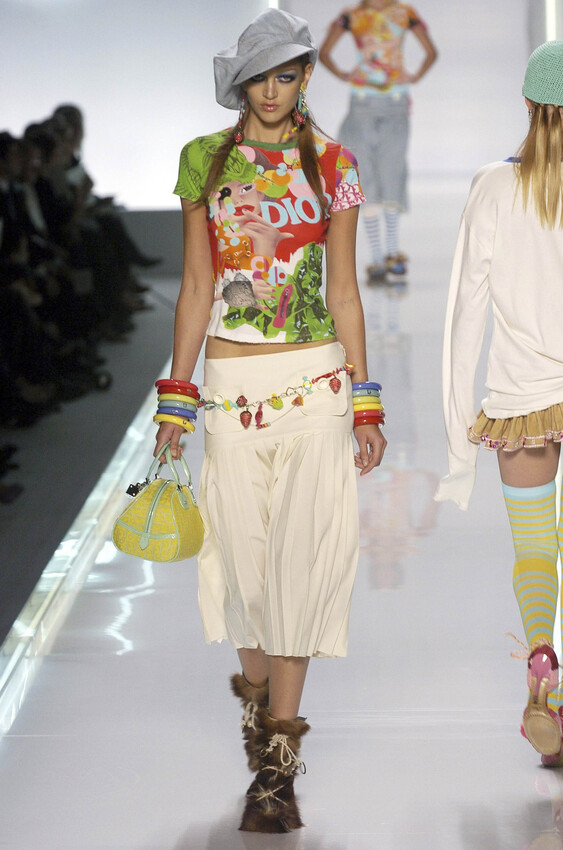
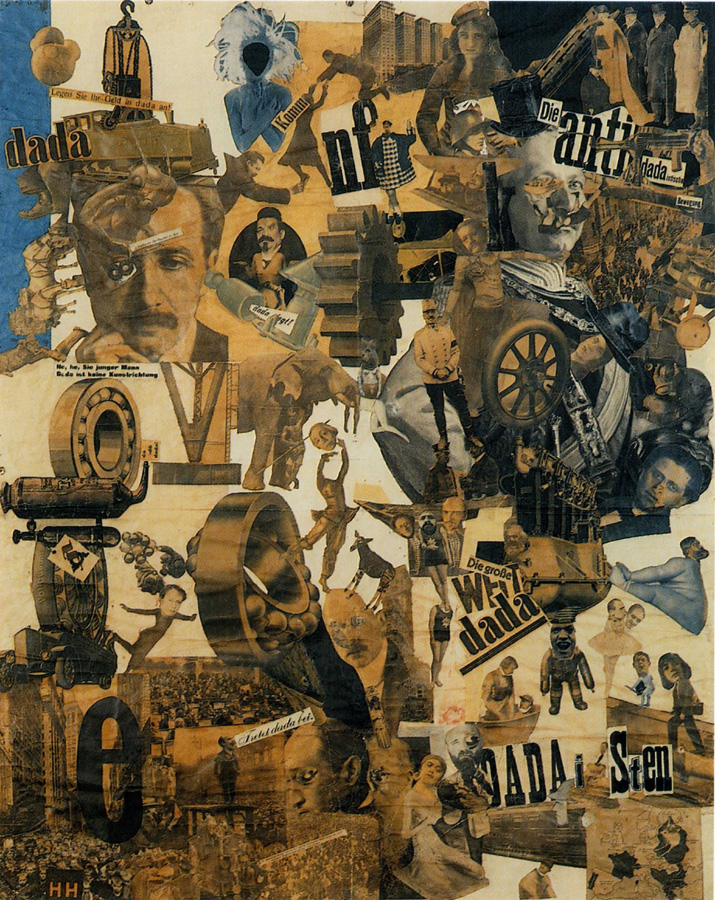
Above: Dior runway; Hannah Höch’s photomontage (1912)
Whether intended by Galliano or not, this is where the collection surpasses expectation. Along with the easy-access sentiment and the choice of bold colours to spark conversation, the collection goes further to critique the institutions that discuss and deal with all things war. It challenges the idea that expressing anti-war sentiment or political beliefs is a one-size-fits-all endeavour, encouraging a questioning of what makes certain political statements respectable while others are not. Alas, I say, Dior, not War!