
Written by Naomi Pang
Edited by Ella Caverson
After four years of anticipation, the Winter Olympics return once again. While the Games celebrate athletic achievements, it can’t be denied that Olympic fashion also incites global excitement. The opening ceremony not only broadcasts the athletes but it also acts as a global runway where countries unveil their national uniforms. The ceremony provides an opportunity to represent each nation’s style with the unique attire in which they present their athletes. With the 2026 Winter Olympics being set in one of the fashion capitals of the world, Milan, the uniforms became a point of even greater anticipation. Over the years, some collections have sparked admiration, while others have been relentlessly critiqued. Despite the attributions, they all have contributed to the ever-evolving story of activewear and Olympic style.
This year’s opening ceremony was a tribute to the late Giorgio Armani, who passed away in September 2025. As the flag bearer, Italian supermodel Vittoria Ceretti led an ensemble of sixty models dressed in monochrome red, white, and green suits; their arrangement in rows gave the appearance of a giant Italian flag. Ceretti wore a custom high-neck white, floor-length Privé gown while the other models were dressed in classic Armani-style suits—a clean-cut blazer paired with a slim mock-neck blouse and trousers. Laura Pausini, who had the honour of performing the Italian national anthem wore a pearl and crystal embellished long-sleeve black gown from the Giorgio Armani Privé Fall 2024 collection. Pausini’s dress contrasted perfectly with the suited models in their bold colour. The suits, Ceretti’s dress, and Pausini’s gown were all simple, elegant, and notoriously Armani, leaving a beautiful tribute to Giorgio and a wonderful means of opening the games.
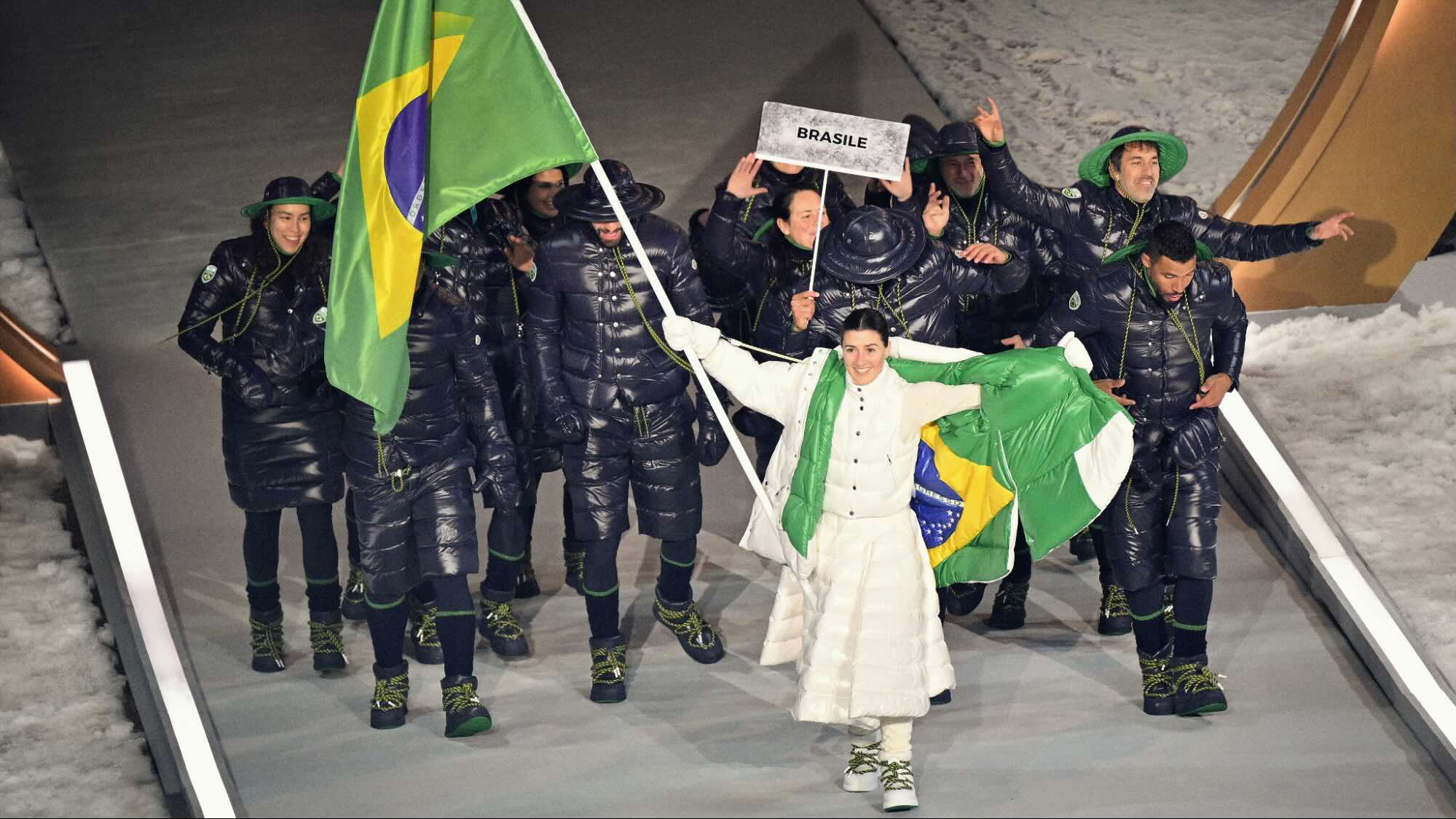
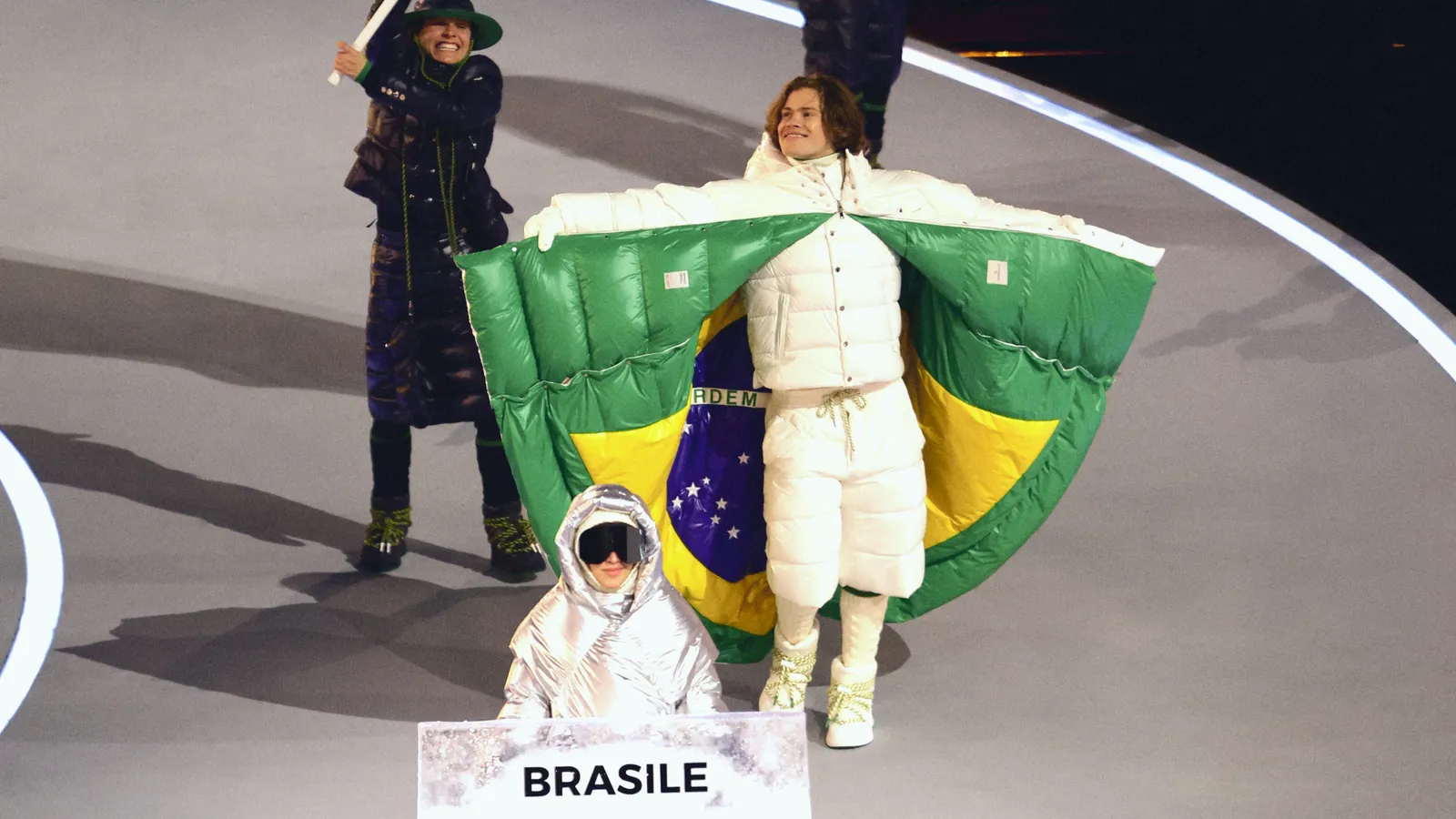
After the Italian national anthem was sung, the parade of athletes began. Right off the bat, I was instantly drawn to Brazil’s eye-catching opening uniforms. The flag bearer, skeleton racer Nicole Silveira and alpine ski racer Lucas Pinheiro Braathen wore white Moncler nylon cape-style puffers that looked ordinary on the exterior, but when unzipped they proudly revealed the Brazilian flag on the interior. The rest of the team wore navy Moncler puffer sets with green accents, paired with an explorer-style hat. The uniforms were a collaboration between Moncler and Oskar Metsavacht—an influential figure in Brazilian sports and fashion design and former snowboarder himself. He is the founder, designer, style director of Oskalen, a Brazilian winter sportswear brand. The former athlete turned designer truly understood the demands of winter sport performance, taking from his own experience. Metsavacht’s touch added authenticity and pride while Moncler brought their notorious functionality and style, proving them an exemplary partnership for sportswear design.
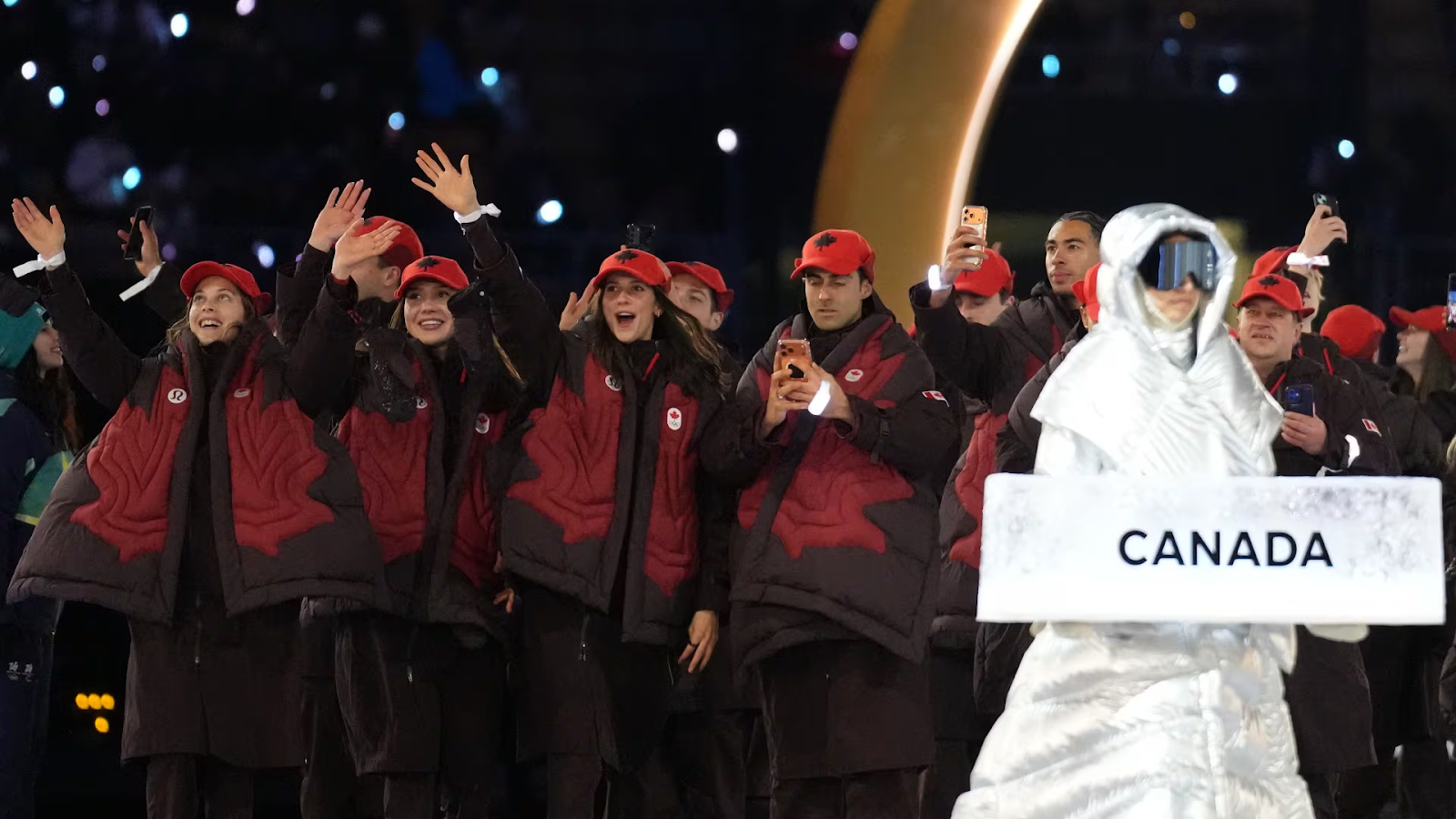
As the official partner for Team Canada for the third time in a row, Lululemon once again dressed the athletes in outerwear that wholeheartedly showcased their Canadian pride. The uniform collection included various shades of red, deep purple, dark turquoise, and all were embellished with the maple leaf. However, many Canadians have a love-hate relationship with the uniform—while some praised the collection for its innovative design, others weren’t so impressed. In particular, the Convertible Quilted Wrap Vest sparked significant online debate. Many social media users attacked the vest, comparing it to sleeping bags, oven mitts, and potholders. To some, the vest’s bulky shape felt more akin to a blanket than a piece of outerwear. Yet beyond the stylistic dispute over the exaggerated proportions lies an undeniable practicality. After all, when having to spend all day in the cold, practicality takes precedence. Especially for the competing athletes, so the adaptive vest ensures their comfort. The collection certainly aroused the praise and criticism from watchers, highlighting not only the athletics but the compelling artistic and social facets derived from the games.
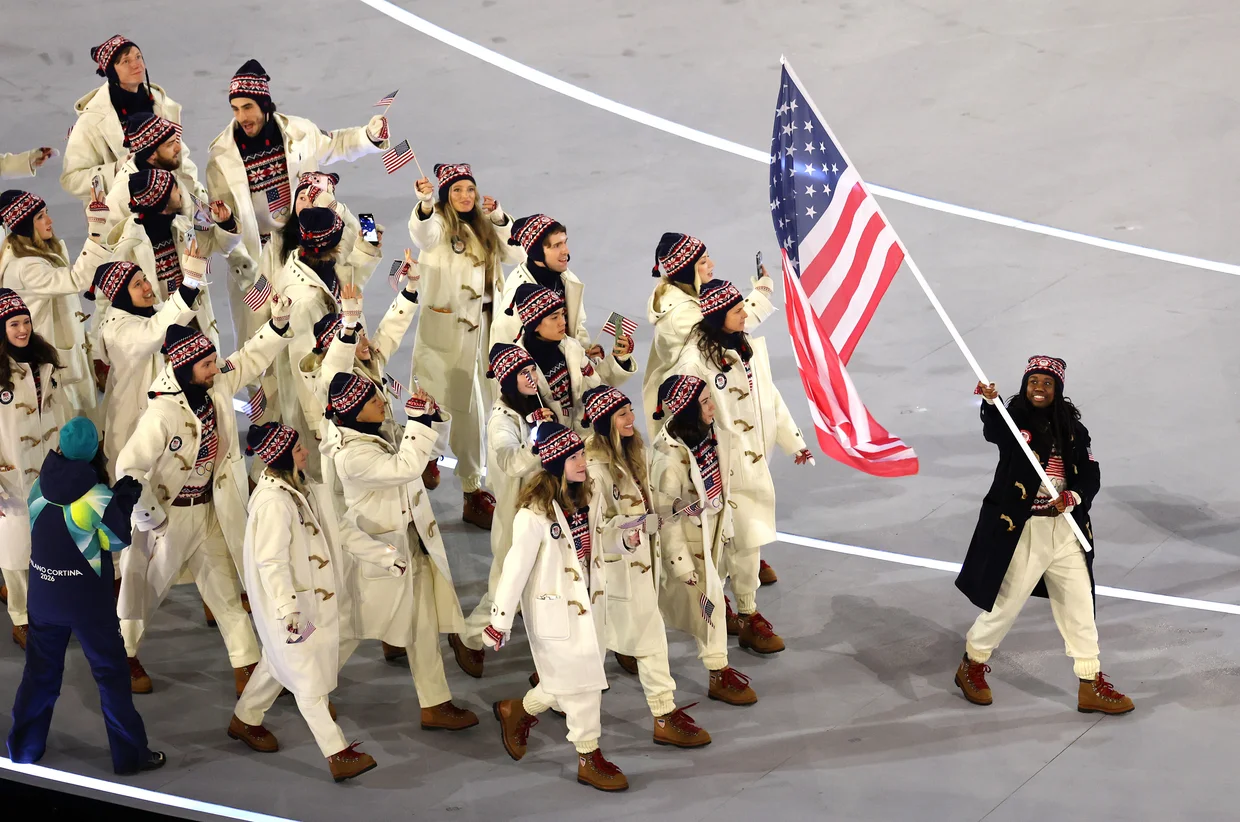
While Canada experimented with their uniforms, Team USA took a more classic approach to the 2026 Games. Once again, Ralph Lauren designed Team USA’s uniforms, showcasing the brand’s signature take on modern Americana. The opening ceremony uniform featured a white wool coat with heritage-inspired wooden toggles, paired with wool trousers and a classic American flag knit sweater. The outfit was accessorized with red, white, and blue knit hats and matching mittens, completing the patriotic look. Team USA’s uniforms undeniably succeeded in delivering a polished aesthetic that celebrates tradition and effortless charm.
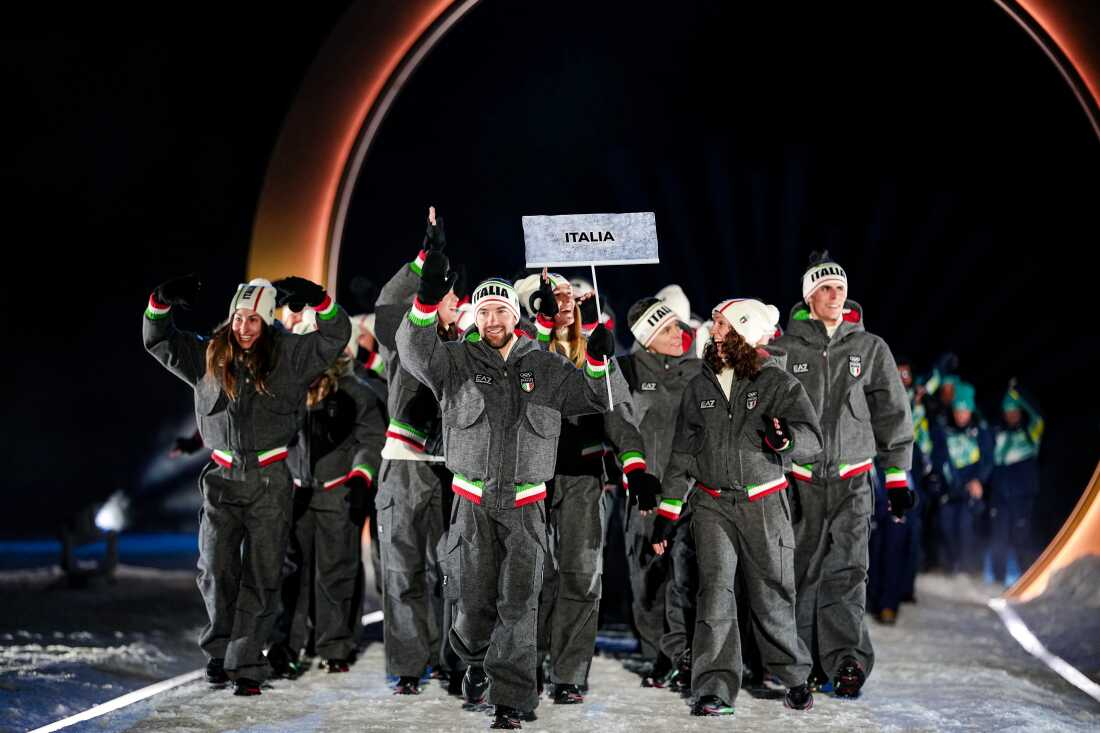
Circling back to the host-country, Team Italy’s 2026 Winter Olympic uniforms were designed by EA7 Emporio Armani. This collection was one of the last to be personally designed by Armani himself. Athletes wore a Charcoal Grey Bomber Jacket with Italy’s colours accenting the cuffs, waistline, and inner hood, paired with matching Charcoal Grey Sweatpants. The look was completed with a white knitted hat labelled “Italia” in bold font. When Armani unveiled the uniforms back in May 2025, he stated: “I couldn’t imagine a more stimulating collaboration, uniting the city that has given me so much and sport. Working for and alongside Italian athletes is always a pleasure and a great source of pride.” The collection symbolizes Armani’s national pride, his talent for design, and serves as an intimate tribute to his enduring legacy—capturing the intensity and style that defined his career.
From Canada’s highly controversial uniforms to Brazil’s eye-catching flag puffers, the 2026 Winter Olympics proved that fashion is as much a part of the Games as the competition itself. Each uniform represented their nation’s culture, and style encapsulating the identity of each country with pride. The uniforms of the Winter Olympics remind us that the Olympic stage also serves as a global runway, where fashion and sport intersect at the most elite level.